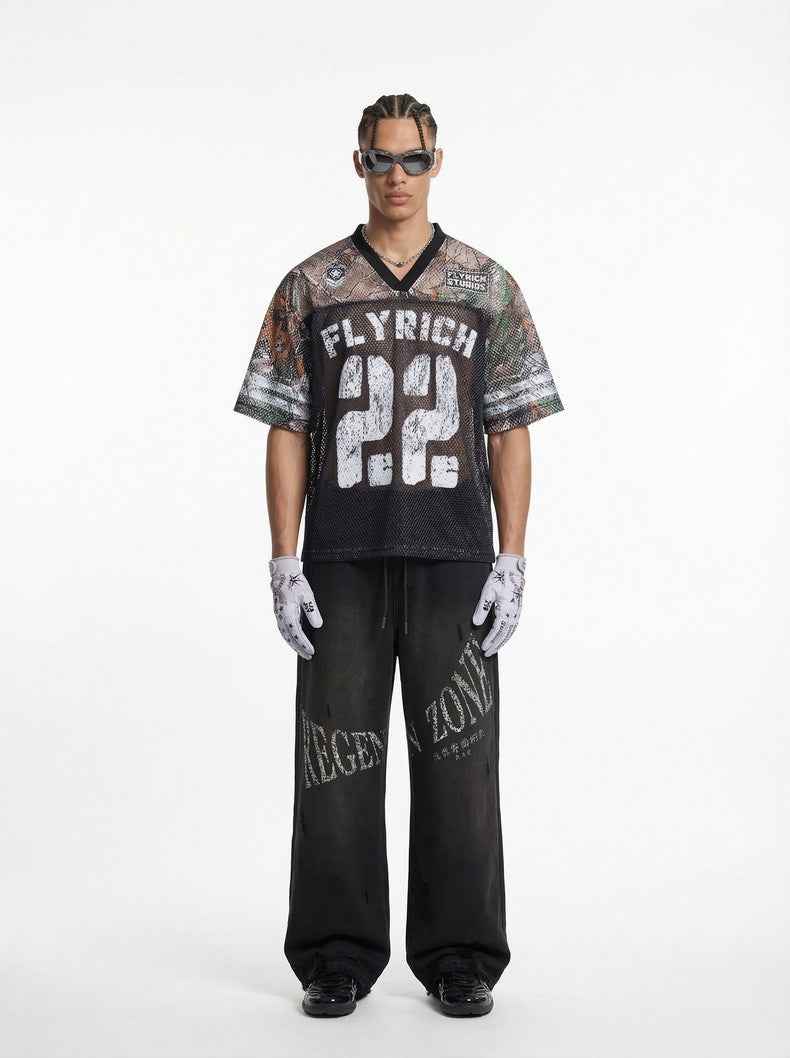
Before a person says a word, the room has already formed an impression. The cut of the jacket. The weight of the fabric. The precision — or absence of it — in how the outfit is assembled. Fashion is a language, and like all languages, it communicates whether you intend it to or not. The question is not whether your clothes are saying something. It is whether you have chosen what they say.
This is not a trivial observation. The study of how clothing functions as a communication system — what sociologists call dress theory and what the rest of us simply call understanding fashion — reveals that what we wear encodes a remarkable density of information. Profession, class, culture, mood, intention, and identity are all legible in the choices we make each morning. Understanding this is the foundation of dressing well.
The Theory
Clothes as a Semiotic System

The French theorist Roland Barthes, writing in the 1960s, was among the first to analyse fashion as a sign system — a structure through which meaning is produced and transmitted. His insight was that clothing does not simply cover the body. It codes the body, turning it into a surface through which social meanings are projected and read.
The signs in fashion operate on multiple levels simultaneously. The denotative level is the most obvious: a white coat denotes a doctor, a uniform denotes a function. But the connotative level is where fashion becomes genuinely interesting — where a particular cut, fabric, or colour combination carries associations that extend far beyond its literal description. A slim-cut black jacket does not simply mean black jacket. It connotes precision, restraint, a certain kind of cultural awareness. A heavily logo’d streetwear piece connotes something entirely different — belonging to a specific subculture, a particular generational moment.
What makes this analysis practically useful rather than merely theoretical is the recognition that these connotations are not arbitrary. They are learned, shared, and remarkably stable across a given cultural context. When you understand the semiotic logic of fashion, you understand why certain combinations read as credible and others do not — regardless of the individual quality of the pieces involved.
“Getting dressed is an act of communication. The question is whether you are speaking deliberately or accidentally.”
— Fashion TheoryThe Practice
What Specific Choices Actually Signal

Fit is the most powerful signal in contemporary Western fashion, and the most consistently misread. A garment that fits well — that sits correctly at the shoulder, that follows the body’s proportions without either clinging or swamping — communicates care and attention in a way that no brand label can compensate for. The inverse is equally true: a badly fitting garment, regardless of its provenance or cost, communicates carelessness. This is why tailoring is not an extravagance but a fundamental component of dressing well.
Colour communicates with unusual directness. Dark neutrals — black, charcoal, deep navy — carry connotations of authority, restraint, and reliability that are deeply embedded in Western cultural tradition. They are the colours of the professional, the considered, the serious. Lighter neutrals — cream, stone, warm white — carry warmth and openness. Bright colours are the most culturally variable: they read as energy and confidence in some contexts, as unseriousness in others. The sophistication lies in understanding which context you are operating in.
Fabric quality is a subtler but equally important signal. The drape of a well-constructed garment in a quality fabric is perceptible at a distance — it falls differently, moves differently, and ages differently to cheap alternatives. This is not snobbery. It is an observable fact about how materials behave. Dressing well on a budget is entirely possible, but it requires understanding which categories of quality are visible and which are not. A well-cut garment in a mid-range fabric will always read better than a poorly cut garment in an expensive one.
“The most expensive thing a person can wear is a garment that fits. The most economical is a garment that does not.”
— On Fit and ValueThe Context
Occasion, Setting, and the Unwritten Codes

Every social setting operates with a set of dress codes — some explicit, most implicit. The explicit codes (black tie, business casual, smart casual) provide a framework, but within that framework there is enormous room for the kind of nuanced signalling that distinguishes someone who understands fashion from someone who is merely compliant with it.
The concept of overdressing and underdressing is more complex than it appears. Overdressing in a casual context does not simply mean wearing formal clothes. It means wearing clothes whose register is misaligned with the setting — creating a social friction that draws attention to the gap between what you are wearing and where you are. Underdressing carries the same problem in the opposite direction. The goal of skilled dressing is not to be the best-dressed person in the room but to be the most appropriately dressed — the person whose clothes are so well-calibrated to the context that they become invisible.
This is the paradox at the heart of serious fashion interest: the most sophisticated dressing is often the least visible. The outfit that works perfectly for its occasion generates no friction, no commentary, no particular attention. It simply allows the person wearing it to occupy the space with full presence. This is the standard MRC WEAR aims at — clothes that earn their place in a wardrobe by serving the wearer’s life, not by demanding attention from it.
“The best outfit is the one that makes you forget you are wearing it — because it is so entirely right for where you are.”
— On Dressing for ContextThe Conclusion
Dressing With Intention

Understanding fashion as a language changes the nature of the choices involved. When you buy a jacket, you are not simply acquiring a garment. You are selecting a set of signals to carry into the world. When you build a wardrobe, you are constructing a vocabulary — a repertoire of ways of presenting yourself that can be deployed across the contexts of your life.
This does not mean that fashion must be taken seriously as a performance, or that every morning should involve deliberate calculation. The opposite is true. When the vocabulary is well-chosen — when the wardrobe contains pieces whose signals are coherent, well-fitted, and appropriate to the life being lived — the daily act of getting dressed becomes effortless. The choices available are all good ones. The language is already fluent.
This is why building a wardrobe with intention matters. Not because fashion is more important than other things. But because the twenty seconds it takes to get dressed is preceded by the months or years of choices that determine what options exist in that moment. The work is done in the buying, not in the wearing. And when it is done well, the wearing requires no work at all.
“Fashion is not about being seen. It is about choosing, deliberately, how to be seen.”
— MRC WEARMRC WEAR · mrcwear.com
Dress With Intention
1,500+ pieces across women’s, men’s, and accessories — chosen for the life you actually live.